Wednesday, February 1, 2012

Genetic Defects and Model Horses: Part Two

Here's part two of my posts on genetic defects and model horses.

I'm going to continue talking about the same horse here. If you'll remember, I mentioned he had Impressive in his pedigree multiple times, and was himself HYPP N/H.

The bottom of the horse's pedigree was nice, with some Three Bars in there (I like Three Bars, just not through Impressive), but there was something scary lurking back there among all the nice stuff: Poco Lena.

But what's wrong with Poco Lena?

Poco Lena comes from the Poco Bueno line. Poco Bueno and Poco Lena carried a defect known as HERDA. This is a recessive mutation that basically causes weakness in the skin. A recessive mutation requires two copies of the mutation to have an effect, so Poco Lena more than likely got it from both her sire and her dam, which means that whole line is very suspect in a pedigree. Current thinking is that the original mutation goes back through a mystery horse line involved in the Poco line, either coming through, or starting at, a horse named Traveler.

There are seven conditions that cause similar problems to HERDA in humans, and they're all very problematic for sufferers. The weakness of the skin caused by these disorders makes it very easy to tear. When skin is opened up, there is a risk of infection. When the skin is easy to tear, that means more opportunities for infection. Simply saddling or riding a horse with HERDA can cause horrific damage to the horse. Sunburn too is a big problem, as the peeling can spread a lot further than it would in healthy skin.

HERDA is usually lethal in 2-4 years in horses.

This is classic HERDA scarring. This is the least disgusting and squicky picture I can find. Everything else is very graphic.

In a way, HERDA is a bit like Vinegar Syndrome if OF model horses, or lifting, in vintage custom model horses.

What does HERDA mean for model horses?

Thankfully, it doesn't mean much. Our plastic horses, unless they have vinegar syndrome, or suffer from lifting, aren't going to fall apart if we happen to have their pedigrees give us a HERDA positive horse.

However, I think for pedigree assignment enthusiasts, HERDA is something to keep in mind. If you wouldn't breed for it in real life, why are you breeding it in your models?

That concludes my Genetic Defects and Model Horses mini-series for now. I don't know enough about other genetic disorders in horses to write about them.

I hope you've enjoyed it, and that it's given you something to think about.

Saturday, January 28, 2012

Genetic Defects and Model Horses: Part One

Today, I went browsing for examples of stud ads, because I want to put together some stud ads for my plastic horses. Since one of the horses I want to make a stud ad for is a quarter horse, I started off by searching for those in a Google image search.

Well, if you know real quarter horses, you know where this is going, don't you?

I found a horse whose portrait looked stunning. He's got a lovely head, and he looks big and studdy. His full body shot wouldn't disappoint... but, I saw something worrying about the pictures. He's big, with a wide chest and haunches, and short legs. He looks like a body-builder. If I didn't know any better, I'd have thought he was a stunning example of a quarter horse. Then I saw the line "this is [horse] in pasture condition", and alarm bells really rang. I suspected that what I saw was a result of a genetic defect called HYPP. Off I went to All Breed Pedigree to confirm my suspicions.

The pedigree is even scarier than I expected. My heart sank. The top side of the pedigree is packed full of Impressive.
Impressive
Why is Impressive a problem? Impressive is the originator of the condition HYPP.

Why should HYPP worry a real horse owner? HYPP is a genetic disorder that has serious health consequences for the horse. His muscles are constantly more contracted rather than relaxed, and when he has an HYPP episode, he can suffer paralysis in his muscles. It doesn't take a genius to know that the heart is a muscle, and that there are muscles responsible for breathing, and in holding the throat open so the horse can breathe. There are muscles involved in digestion too. A horse having an episode can collapse as his legs fail him, or can suffer heart failure, or can suffocate to death, or suffer a deadly colic and this can happen any time his sodium levels creep too high.

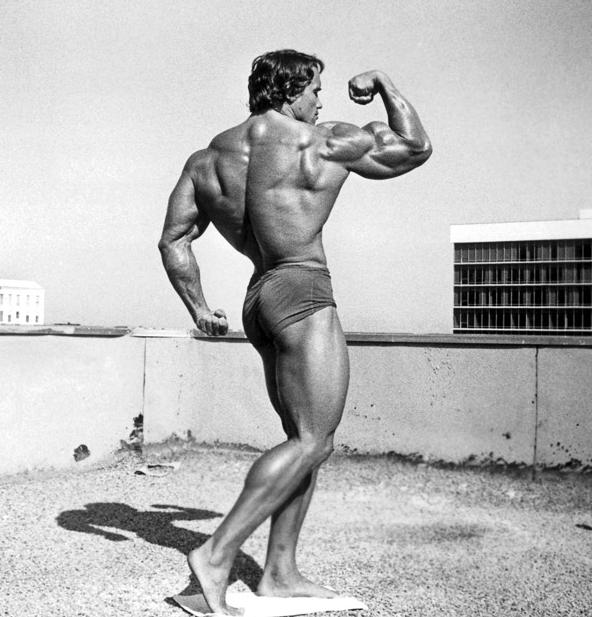
You remember how I mentioned that HYPP horses have muscles that are constantly more contracted? This gives them the appearance of being big, beefy bodybuilder looking horses. They look like the horse version of Mr Universe.
Arnold Schwarzenegger
HYPP, despite its problems, continues to be somewhat sought after in the halter world. An HYPP positive horse has big, dramatic muscling, and tends to be evenly muscled front and back. He looks impressive. That's desirable in the halter show ring, so breeders have continued to breed for HYPP, despite the health risks that go with it.

Impressive himself wasn't too drastic, which is what you'd expect in a horse that only has one HYPP mutation. That's normally written HYPP N/H.

The horse I was looking at was HYPP N/H, and was bred from two HYPP N/H horses. Scary.

When you breed two HYPP N/H horses together, 50% of the time, you will get an HYPP N/H horse. 25% of the time you will get an N/N. The other 25%, you get an H/H.


HYPP H/H horses have rarely won anything in the halter show ring. They tend to be very drastically muscled, and in my opinion, they tend to look a bit grotesque. They're also much more prone to HYPP attacks.


There's a question as to whether it's ethical to continue placing HYPP positive horses in real shows. By placing them, the AQHA is basically giving tacit approval to breed horses that are dangerous, not only to the horse, but to their handlers as well. A horse suffering and HYPP attack can kill or seriously injure anyone or anything around it, as well as itself.


How should a model horse judge look at sculptures of HYPP positive horses? Looking at the rules the AQHA has set would seem a natural place to start.

HYPP N/H is not prohibited in Quarter Horse registration. It's allowable. It's not even heavily discouraged by the breed assocation.

HYPP H/H cannot be registered with the AQHA. Period.

A judge, and a model horse shower, need to know what they're looking at. If the horse looks HYPP H/H, that horse shouldn't place in a model horse show. It's not registrable. If you are going to place it, it had better place only in color classes, or in Mixed Stock Breed/Grade/Mixed Horse classes, because that's all it can be.

What about HYPP N/H? That's legal. Well, this comes down to judge's decision, ultimately. Personally, I won't place an HYPP N/H looking horse over an HYPP N/N horse, pure and simple. If it's not ethical in the real world, it's not ethical in plastic pony land either.

I'd have included pictures of HYPP H/H horses to give you an example of what they look like, but I really don't have the energy to argue with a real horse owner about the intricacies of the laws about libelous writing.

Come back Wednesday for more on Genetic Defects and Model Horses.

Friday, January 20, 2012

Stories from the Ranch: Winter Weather Warning

Today, I'm trying something new, I'm sharing some fiction writing about my ranch with you. I was going to do a basic write-up about upcoming events for my horses, but I'd rather do it in the form of a story than in summary like before. Eventually, I want to start sprinkling in pictures of my models to go with the stories, a sort of partial photo story.

 Winter Weather Warning

The day started with a winter weather warning for the area around Long Road Home Ranch. Even the horses, normally frisky in the cold, stood huddled together in their fields. Every one of them was coated in a thick high tog rated blanket, but from their sullen looks, it was clear it was still too cold for them.

Many of the horses had looked askance at the stable staff when they were turned out of their nice warm stalls into the cold, but this might be the last opportunity the stable had to safely move soiled bedding to the muck heap with the front end loader.

The forecast called for snow turning to freezing rain, and later sleet on top of the freezing rain. It would turn the yard into an ice rink. For the jockeys and stable staff, that would be a fun novelty. Ever since they'd heard the forecast, they'd been talking about leaving half of the arena unsalted so they could play winter sports. Another staff member had joked they could put some studs in Wasabi Sensation's shoes, put his racing harness on, and give ski joring a try.

One of the staff had even suggested a spot of grooming bucket curling. Sharon had to admit, that sounded like fun. She'd given them permission to leave the uncovered half of the arena unsalted so they could play their winter games, but she had no intention of joining them. It was too cold. Alfio, the jockey from Colombia, had very vigorously agreed with that sentiment. He'd never experienced such cold in his life. Like the owner, Alfio was bundled up in four sweaters, and a coat, as he and the rest of the jockeys trudged upstairs to the lounge and office over the small barn.

One of the western performance riders, a lad named Dicky, was watching videos on the big screen TV. Dicky didn't look up as the jockeys trudged up the stairs, and kept taking notes on his clipboard.

"I don't recognize that horse, that's not one of ours, is it?" Sharon said.

Dicky looked up, startled. "No, that's a colt out of a mare I was looking at for a new reining prospect. I love your Blendy-colt, but he's way too hot for reining. If we're going to win, we need a more laid-back horse."

Dicky leaned forward and hit pause on the remote, then picked up a magazine. "I was looking at this mare," he said, pointing at one of the full-page full-color glossy ads, "So I figured I'd do some research and see what her babies are like."

"Oh, I'll leave you to it, then."

"Is that a yes, then? You're gonna consider buying or breeding a new reining prospect?"

"Yep. But on one condition."

"What's that?"

"We're going to try something new with the next one. I want to see if those new boots that are designed to take shoes will work with slider plates. I hate that Blendy-colt has to be turned out on his own all the time, and that he can't be turned out outside at all when the weather's bad."

Dicky gave her an odd look. "For chrissakes-"

Alfio gave Dicky a stern look.

"Sorry," Dicky said respectfully, then turned his attention back to Sharon. "Boss, it's a horse, not a baby."

"Yes, and I think a horse should be a horse. Horses are herd animals, so they should be in herds if they can be. He's the only stallion here that doesn't have a pasture mate."

"I don't see what option you have, boss. Are you really gonna pull his shoes off every time he comes home just so you can turn him out with a buddy? You'll mess his hooves up."

Arnold rapped the teaspoon on the side of his cup of coffee, flinging the last drops of coffee off the spoon and into the cup. "If you can fix a hoof like Barbaro's with resin... couldn't you fix a shoe to a hoof with it, too? That way, you could just put his shoes on for shows and leave him barefoot the rest of the time. He'd probably slide more too, because he's not so used to walking on his sliding plates."

Dicky shook his head. "Nah, you'd lose all that smoothness and straightness in the slide, and he'd struggle with his direction changes. You're better keeping him shod all the time."

Sharon shrugged as she went into her office. "You find me a stallion and a mare you think would make a good reining baby, and I'll figure out the rest of it."

She opened up the filing cabinet, and pulled out a stack of folders, then headed back into the lounge and threw them down on the table. "Anyway, let's get this racing business sorted. The horses are leaving tomorrow, and we're leaving for Australia on Monday, and I want to make sure everyone's got their travel and work documents in order. This is our last chance to get anything sorted."

Sharon pulled out her checklist. "Passports: human."

Everyone put their passports on the table in front of them.

"Work visas?"

Everyone put their visas on the table.

"Racing license: Australian."

Everyone put their racing licenses up on the table. Sharon noticed some of her jockeys had a big stack of racing licenses to sort through. Arnold's stack of racing licenses was huge. She recognized some of the headers on them as he sorted through them: Georgia, South Carolina, North Carolina, Pennsylvania, Ohio, New Jersey, Great Britain, Ireland, France...

Finally, Arnold put his Australian racing license on the table, with an apologetic look on his face. "Sorry, too many to search."

Alfio held up his stack of racing licenses. "Alphabetically sorted. Much easier to find them that way."

"Alright, everyone grab a horse folder."

The jockeys all grabbed a folder. Sharon picked up a pen to check the documents off her list as they found them.

"Alright, name check first: Aasifa Bint Johar?" Check. "Antar Al-Ahmar?" Check. "Backfire? Pride of Nayef? Rum Runner? Shes All That? Solar Eclipse? Wafiyah?" Check, check, check, check, check. "Excellent, that's everyone."

"Registration certificates?" Check.

"Vet check #1?"

The vet checks for flying the racehorses to Australia had started weeks ago, with scheduled Equine Influenza vaccinations, and coggins titres. With eight horses to vaccinate and check, the vet checks had taken all day.

"Excellent. Vet check #2?" Check.

"Fantastic, that'll do it." Sharon went back into her office and grabbed a water-tight filing tote to put the files in. "Let's get these files in here and get them in the horse box for the ride to the airport tomorrow."

Thursday, January 19, 2012

All Breeds Racing Board Spelling Season Ends February 4th

If you've been following my blog, you know I've been racing over at the All Breeds Racing Board since November last year. The atmosphere there is great. It's a young club, only a year old, and most of us are new to model horse racing, so we're all learning the ins and outs of the model sport of kings together. Our first race of the year is on February 4th, with the last call to the post on February 3rd, so now's a great time to join the club and prepare for the upcoming racing season.

If you'd like to join in, click on the picture above, or type the URL into your browser bar, and sign up for an account with the Starting Gate tab on the website.

Wednesday, January 11, 2012

Dreamflite's English Saddle Instruction Guide

See the original post here

Dreamflite Design is putting the finishing touches on her Stablemate Scale English Saddle Tutorial, preparing it for public release.

The guide includes...
  • 17 pages of information, instruction, and reference material.
  • 71 full-color pictures and illustrations
  • A list of suppliers and helpful links
  • Photos of REAL saddles for reference
  • Pattern for saddle parts, sized for the G3 Warmblood
  • Some tips and tricks to make the process easier
The guide will sell as a PDF for $10 a copy, but as a thank you to her blog readers, anyone who emails her and requests a copy between today and January 17th will get a copy for free! You'll have to click through to her blog to get her e-mail address, I'd rather give her direct traffic than share her e-mail addy myself, so click the link at the top of this post to get to her original blog post.

I'm really looking forward to snagging my own copy of this guide, because it'll be really helpful for me, having never made a saddle myself.

Monday, January 9, 2012

Things That Make You Go "Ouch!"

I decided, during a break in work, to do a bit of light reading about Norman (as in the people from Normandy circa 1066) tack. I thought it would be neat to make a set of Norman tack for a horse.

In reading, I found this passage in Festivals, Games & Amusements, Ancient & Modern by Horace Smith (Amazon link):
"During a siege," says this ancient writer, "it happened that two soldiers running in haste towards a tower situated at a little distance from them, were attacked with a number of arrows from the Welsh; which being shot with prodigious violence, some penetrated through the oak doors of a portal, although they were the breadth of four fingers in thickness."
Yes, that's about a hand of penetration through an oak door. From this, I think it's safe to say these bows were more than just a little deadly. According to the Mythbusters, four inches of penetration in a human can be considered potentially lethal, so four inches through an oak door means there's more than enough force to go clean through a human.

What followed was not particularly shocking, in light of the previous passage.
"It happened also in a battle at the time of William de Breusa (as he himself relates), that a Welshman having directed an arrow at a horse-soldier of his who was clad in armour, and had his leather coat under it, the arrow, besides piercing the man through the hip, struck also through the saddle, and mortally wounded the horse on which he sat."
Yikes! That's pretty hard to imagine going through. You've got an arrow in your well-armored hip, you're pinned to your saddle, and your horse just went down under you. You'd think that's a worst case scenario, right? Wrong!
"Another Welsh soldier having shot an arrow at one of his horsemen, who was covered with strong armour in the same manner as the before-mentioned person, the shaft penetrated through his hip, and fixed in the saddle; but what is most remarkable is, that as the horseman drew his bridle aside in order to turn round, he recieved another arrow in his hip on the opposite side, which passing through it, he was firmly fixed to the saddle on both sides."
Where to begin? Ouch that had to hurt? Or man that guy has rotten luck?

As a historian, and a former joust squire, I find this stuff fascinating, so I thought I'd share it too. It's topical, isn't it? It's horsey, kind of, and it was found while researching for model horse tack.

Sunday, January 8, 2012

I Heart Blue and Silver Rhythm Beads

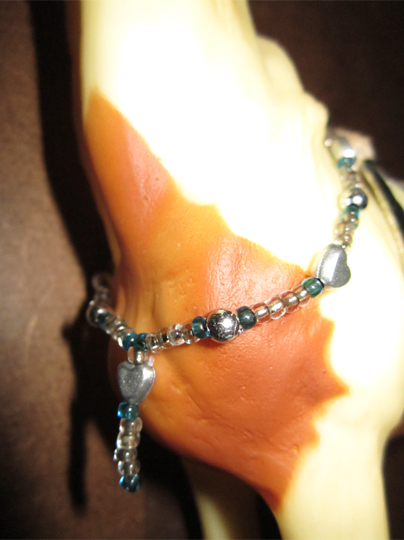
This lightweight set of plastic rhythm beads is made with love; the proof is in the design, with satin silver heart beads, big, glossy silver beads, and a splash of pale blue color to really make them pop.

Yesterday evening I finished up a quick tack project, a set of rhythm beads for Classic scale horses. They're simple, if a bit fiddly to make, but I had fun making them.

They're available on Model Horse Sales Pages for $10 or best offer, postage paid to anywhere.

Impressive Tack Sales Photo

I was browsing MH$P when I stumbled on this gem of a sales photo in the tack category.


The photo and tack are by JS Custom Tack. What really caught my eye is that not only does it show the saddle in excellent detail, it also shows the tack in situ in a miniature tack room. This is a fantastic presentation of a saddle for a sales photo. If I were not financially challenged, and were in the market for a model horse saddle, a composed shot like this might very well clinch the deal for me.

A large, good, clear photo, with the saddle either on a model, or on a saddle stand, will always be better than a pile of tack, it shows that the person is proud of their work, and happy to allow you to scrutinize it. The willingness to provide high detail pictures shows that there is nothing the tack maker wants to hide.

Setting up a tack room diorama to take that sales photo says so much more. Not only are they proud to show off their tack, they're also saying "look at my attention to detail!" Think about it, if they've gone to the trouble of constructing a flawless, in-scale tack room, how much trouble did they go to in capturing the tiny details while making that tack item? You know you're going to be getting a superior product.

This is fantastic Ms. Skybova! You've given me a lot to think about, and a new pet project: making a miniature tack room, and someday filling it with amazing pieces of miniature functional art!

Saturday, January 7, 2012

Tack tip!

Reading the Braymere Custom Saddlery blog comments today before I get back to work on my diorama and customs (especially Antar) yielded a great little tip for how to make keepers for miniature tack.

Here's the original post: Braymere Custom Saddlery: Tiffany's Show Hack Bridle

And here's the excerpt from the comments that really caught my eye:
Sian said...
Just WOW! And what did you use for the metal keepers? 
Braymere said...
Thanks, everyone!

The keepers are made from very thin brass sheet metal. I cut them out with tin snips and shaped them with pliers. They're fairly easy to make--the trick is getting them consistently the same size!
So! There you have it! A great little tack tip in Braymere's comments. I love reading her blog because she does share those great tips, and it's so fun looking at the beautiful tack she makes.

Tuesday, January 3, 2012

Workbench Update

On New Year's Eve, Antar Al-Ahmar was finally in his first coat of primer, but before he'd even dried, I noticed some problems, so as soon as he was dry, out came the Bondo Glazing Putty (I am not paid by, nor affiliated with Bondo, I just really like their products!).

So, here's some progress pictures to show off what I have so far. This again, is part of trying to break my problem with posting work in progress pictures, so you've actually got two WIPs here, the horse, and the diorama I photographed him on.

The red spots are Bondo, the white spots are sanded high points. I'm still not done with the Bondo, I want to smooth his tail so it matches his mane a bit better, but this is how he looks at the moment. I think he's looking pretty spiffy.


And just to get me even further over the hump as far as posting progress pictures goes, here's another item on my workbench:
This is the G2 Prancing Morgan body with the G2 Appaloosa tail, a G3 Mustang head, and G2 Thoroughbred ears. I think he looks kind of Andalusian-ish. This guy still needs a ton of work, including taking a Dremel to his neck/chest, and filling in a big hole in his neck. He actually doesn't stand on his own, he's leaning against the jump behind him, so I'm going to have to figure out a base for him as well.

Saturday, December 17, 2011

Racing Results

LRH Backfire wins the Vristina Stakes
This running of the Vristina Stakes was open only to race winners. There were two entrants, Long Road Home owned LRH Backfire, and White Pine Stables owned Liberty N Justice.

The night before the race there was a heavy rain that soaked into the track. On the morning of the race, the rain lightened to a slow drizzle. Though the rain stopped an hour before post time, the track only dried a little. The course was recorded as 'muddy', which didn't suit pre-race favorite Liberty N Justice.

Liberty N Justice broke first from the gate, followed by LRH Backfire. The younger mare fought back, making up some ground on the muddy course. The pace was slow due to the mud, but both horses battled hard for position.

LRH Backfire finally broke the neck and neck racing in the final furlong, stretching out to four lengths ahead, but quickly losing steam, to finish the race ahead by a neck.


Black Cauldron wins the Tarn Lake Maiden
This sprint ran on a fast track, thanks to the new artificial surface that was installed.

The pre-race favorite was Black Cauldron, a 9 year old black quarter horse mare by Sylver Champlain, out of Ruby Tuesday.

Shes All That was calm in the paddock, which Long Road Home considers to be a big improvement over the last outing, however, the mare still showed signs of her high-strung nature during the trip to the gate. Both mares loaded into the gate without difficulty.

The race was quick, with Black Cauldron taking a lead straight out of the gate, and holding it for the whole distance, to finish by two and a half lengths.


Majeed wins the Iskoola Stakes
As expected, Majeed, the seven year old Egyptian Arabian stallion owned by Cherox Park, won the Iskoola Stakes.

The race was beautiful to behold. It is rare to see two Egyptian Arabians in a race, so to see one that had only two horses, both Egyptians, an older stallion and a filly was very special indeed.

The black stallion romped home ahead of the bay rabicano filly, both with tails soaring like pennants. This race was simply beautiful, and Long Road Home is very happy to have had a horse in the race. We hope the spectators enjoyed this race as much as we did.


This rounds up the last of our All Breeds Racing Board races for the year. The All Breeds Racing Board believes in giving the horses and organizers a break over the foaling season, and we at Long Road Home know our horses will be glad of the rest.

Our horses will all return next year as four year olds, and will be joined by three new racers.

Saturday, December 10, 2011

Projects on my Work Bench

I don't like to post WIPs for anything I do. I like my work to look kind of magical, like it just somehow, amazingly, comes out of nowhere all finished and pretty, and hopefully amazing.

However, since I want to do a roaning and a dappling tutorial, I'm having to rethink that a little, so, to get myself used to sharing WIPs in their ugly phases, here's the projects I have immediately to hand on my workbench at a little after 5 in the morning:

LRH Wasabi Sensation

I'm still pastelling Wasabi Sensation's base coat before I can start on his roaning. I've adjusted the color a little to represent his real color a little better, but I think using the vivid/technicolor setting on my camera might have been the wrong choice for this stage of painting. Right now he is more vivid orange than I intend him to be. The next couple of layers are going to tone it down a bit and start darkening his head and legs. Right now, he's hanging out by my computer ready for the next step of pastel dust.

The wire is what I used to hold him for sealing, and to hang him by when he's drying. It's just some twisted wire around his neck, leaving a long enough tail for me to hold him and not spray myself. The wire's super thin, so I can still work around it as I pastel. When I'm done painting, I'll just have untwist it from around his neck. It's kind of creepy hanging a horse by the neck with a wire garrote though.

Antar Al-Ahmar
This is the CM that's been giving me so much hassle. Every time I think I'm done, there's something else that needs to be done. This was meant to be a simple head swap, neck move, and now it's a lot more than that. At this rate, I'll have resculpted everything by the time I'm done.

Pride of Nayef
Pride of Nayef is my new All Breeds Racing Board horse for next year. He's a TB stallion. He's going to be a greying out bay with a chaser clip. The red 'stuff' is Bondo Glazing Putty, and it's what I use instead of Apoxie Sculpt and modeling paste. This guy still has a lot of work to go. I've got both front legs almost done, but as you can probably tell, the upper long hair isn't fully edged yet. I still need to do his back legs, and the entirety of his other side. I want to rework his head a little too.

I think I'll be using Pride of Nayef as a quickie tutorial for a dark grey bay and how to paint a clipped horse, since he's handy.

I actually have two more CMs handy to photograph, but I really can't be bothered, because I literally woke up less than half an hour ago, and haven't had coffee yet.

Blogging without coffee first probably wasn't the best idea, but I just wanted to get this done.

Tuesday, December 6, 2011

Caballo Criollo Colombiano

The Stablemate from last Friday's post was going to be pedigreed as a Colombian Criollo, rather than being a plain old Iberian breed, such as an Andalusian or Lusitano. Of course, since I neither speak Spanish, nor have friends in Latin America, finding information about these horses has been tricky.

Though the Colombian Criollo is named a Criollo, that doesn't mean it's the same as the Argentinian Criollo; here, Criollo is used to mean 'Latin American horse', as it is for many South American breeds. The Colombian Criollo has also been called the Colombian Paso Fino. From the gist of the google translations of Colombian Criollo forums, it isn't really considered fair to call them that either.

The reason it's not really fair to call the Colombian Criollo a Paso Fino is because thanks to the introduction of imported Canadian Pacers and Trotters to the breed during the heyday of sugar plantations, it's very different from other Paso Finos. The breed retains little of its Iberian ancestry compared to other Latin American breeds.

Though there is some cross breeding with the Paso Fino, Colombia has types of horse that appear to be unique to Colombia. Something about the land there makes the gaits of other Spanish-descended breeds less practical. Translations suggest that the rough terrain makes an ambling or gaited horse more practical for every day use.

Well, now I had a bit of a background on why the Colombian horses are different, that still left the question: different how?

As it turns out, Colombia has three types of gaited horse, all more or less considered the same breed: the fino, the trocha, and the trote y galope.

The paso fino does exactly what you'd expect it does: the fino. This variety appears to be crossed with Paso Finos more often than the other varieties.

The trocha is more or less what we'd call the foxtrot, a broken trot sequence where the diagonal pairs are picked up at the same time, but with the front foot landing before the hind foot.

The trote y galope trots, and performs an extremely collected canter. They actually do this naturally in the field as foals, which was very interesting to watch on You Tube. Watching the foals in videos, it does appear they can also perform a more stretched canter, but naturally tend to fall into the very collected form.

So where do the trocha, trote, and galope come from?

It appears the introduction of the mare La Danesa and her very popular and prolific son Don Danilo are behind the introduction of the new gaits to the Colombian horses. La Danesa's sire was a bullfighting Lusitano brought to Colombia in 1946 by the bullfighter Lady Conchita Cintron.

Don Danilo (Rey Cometa X La Danesa)

Don Danilo could perform the paso fino, the trocha, the trote and the galope, on command. Many of his famous offspring were trocha and trote y galope horses.

So, now I had to decide: is LRH Y B Rojas a fino, a trocha, or a trote ye galope? Since he's not performing any gait, he could be anything I liked. But, there appear to be differences in build between the types of horses.

The fino is longer in the back, shorter in the legs, and all around thickly built, and looks a bit like a classical painting of a horse. It looks like you expect a Paso Fino to look. That build is what makes him perform that gait. Pretty much any horse built that way, regardless of its breed, will try to move the way the Paso Fino does, because it's the best way for its body.

The trocha is similarly thick, but more proportional, at least to my eyes. He's not so short in the legs and long in the back as the fino.

The trote y galope looks more like what I think of when I think 'horse'. I'm from thoroughbred country, having grown up only an hour and a half trot (12 miles) from Newmarket in the UK. They're a little more fine than the trocha and fino, and look very much like a sporty Spanish bred horse, rather than a baroque Spanish horse.

It should be noted that they all still very much fit the breed description of the Colombian Criollo, despite their differences in build. The differences are slight, but I think quite noticeable. In any case, you'd know what you're looking at as soon as it moved, even if you couldn't really see the slight differences I'm seeing in how they're put together.

Y B Rojas isn't really thickly built enough for the trocha or the fino, and his legs are too long for a fino. That leaves me one option: he's a trote y galope. That suits me fine, I think they're prettier anyway.

I hope that post gives people a tiny bit of insight on Colombian Criollos, and I hope I've understood what I've read.

If you can type in English well enough to tell me more, I'd love to hear more about the breed, if you know more. I mean no offense when I ask that you write to me in English, I just really don't know any Spanish at all, I only learned French, German, and a smattering of Swedish and Japanese.

Links to more information about Colombian horses:
Staccato Beat! Gaits of the Paso Fino
American Trote and Trocha Association: Breed Information
American Trote and Trocha Association: Don Danilo
Pet MD: Colombian Criollo
Google Books: International Encyclopedia of Horse Breeds by Bonnie L. Hendricks and Anthony A. Dent

Friday, December 2, 2011

Playing with my new camera

I got my new camera yesterday, and had a play with it. Here's some of the shots I took with it while I was learning how to use it:

Riley
LRH Y B Rojas
LRH Rum Runner wearing a deluxe red and black nylon halter made by Long Road Home
Socks (the pink spot is a corneal graft)
LRH White Lightning wearing a nylon safety halter made by Long Road Home

That's not all the pictures I took while I was playing around, I deleted a ton more. My camera battery needs recharging before I can play some more.

Now I've got a decent camera, maybe I can focus on making some tack for sale. I've got plans for some nylon and leather halters, and possibly some rugs. They won't necessarily be rugs that match with halters, since I only have three colors of ribbon, one satin red, one satin black, and one grosgrain black, and one larger satin yellow, but maybe they'll catch someone's eye anyway :)

Thursday, December 1, 2011

Thinking About The Art of Horses

I've been hit with ideas as soon as I settled down for my "morning" coffee and catch up with what happened on the web while I slept.

I clicked through a few links, and found myself at Phaze Studios again. As often happens when I read someone else's blog, I stumbled across another gem: What do I want to do? In it, Liesl discusses some different approaches to art, and it's well worth reading for a quick grounding in different art styles.

While I was reading it, I started thinking about my artistic taste. My preference has always been toward the impressionistic end of the 'accuracy of depiction' scale.

That accuracy of depiction scale goes something like this:
Impressionism doesn't seek to accurately capture a form, rather to capture a feeling, often a feeling of movement as well as emotion. A child's drawing of a horse will often be clearly identifiable as a horse, but to an adult's eyes it might look coarse and lacking in definition.

Realism seeks to capture a subject as it is, with no bells or whistles. To me, this style often looks dull and lifeless. The energy is gone, and a sculpture looks like what it is: a lifeless accurate representation of a form. When I look at realism, I can't connect to the subject at all. In striving to capture the reality, an artist often loses that je ne sais quois found in other models. It looks like a real flesh and blood subject, one you could walk up to in real life and recognize immediately, but the artist has often sacrificed spirit and personality to depict something realistically.

Hyper-realism is itself somewhat impressionistic, but in the opposite direction: it shows details that might not be visible on the real thing. On a model horse, you might see hints of underlying skeletal structure, or veins that in reality are not nearly so close to the surface. These models tend to look very dry. It works well for half-starved Akhal-Tekes and skinny two-year old racing TBs, but it looks dreadful on a draft horse or a fat little British native pony.

My personal taste is somewhere in the mid point between impressionism and realism. I want to capture the spirit and feel that's in an impressionistic form, but to pay some mind to the realism of the subject. I want my work to look like it could be an individual you could really walk up to and meet, and one that you can guess how he'd behave as you approached.

I think that's why Antar has been working me so hard. I started off with a vague idea: I want an Arabian in the hard stand, but not perfectly so. I want him to have personality: I want him proud, but alert, strong, but gentle.

So, I altered the pose to turn his head, and he has an ear twitched back on the same side his head is turned to. He's in that moment just before we completely lose the hard stand and he cranes his neck to look behind him at the horse causing a ruckus somewhere behind him; the moment where he needs a tug on his lead to get his attention again.

This is actually something I have no reference pictures for: this pose worked solely from the picture I have in my head, and a little knowledge about biomechanics in movement and sensing.

When I was an Army Cadet, I was given a piece of advice on standing to attention and at ease: don't follow movement with your eyes. You might not notice it, but you will move your head and body to follow the movement. If you stare blankly ahead, and tune everything out, you'll stay mostly still, except for the slow weaving that comes with reacting to balance yourself as your chest moves while you're breathing and subtly shifts your center of balance.

When you hear an unexpected sound, if you're like me, you'll feel your ears twitch, and then you'll turn in the most biomechanically efficient method to look where the sound came from. This is an instinctual thing, and actually takes a lot of training and familiarity with a sound to not do. What you'll do naturally, is you'll turn the ear nearest to where the sound came from toward the source of the sound.

I watched a few documentaries about ergonomics and biomechanics during my GNVQ Engineering courses, which showed that if you ask someone to touch an object behind them without turning around, they'll naturally do it in the most efficient and fluid motion they can. As an example, let's imagine the target you want them to touch is at waist height, about two and a half feet behind their center line. They'll bend their dominant arm at the elbow and swivel the shoulder and wrist, in the same motion twisting their head, neck and torso to afford them a peripheral view of the target. They'll bend at the waist, dropping their dominant shoulder toward the target, and they'll slowly extend their dominant arm toward the target. Their fingers will make contact with the target with the palm up, and the wrist twisted toward the target, with the high point being the outside of their wrist.

So what does this mean for Antar?

Antar detects a sound behind him, and one ear immediately flicks toward it. The other twitches back out of its high forward pricked position, but returns forward when he starts turning his head in the direction of the sound. His ear will stay lined up with the source of the sound as his head comes around. The sound source comes into his peripheral vision first as his blindspot at the back of his head moves right over his haunches and shoulders. As he turns his head, he'll also twist it down, because it's the smoothest and most efficient motion. If he's unimpeded, he'll probably step his back right leg forward and right out of his hard stand to begin a pivot around his shoulders to put his left side to the source of the sound, and bring the thing causing the noise into the clearest part of his vision. The interesting thing is that as he steps around, he'll likely drop his tail a bit, both to free himself to move more easily, and as a reaction to mild fear or apprehension. The high position his tail is in during the hard stand is one of a proud, fearless horse, as it doesn't cover some of his most vulnerable areas. As a prey animal, he'll feel more apprehensive following a sudden noise, and will likely lower his tail a little to protect those delicate areas around his rear.

In my sculpt, Antar hasn't yet started stepping around, and hasn't lowered his tail yet. His legs should be tensing ready to begin moving. (Uh-oh, a new thing to work on! Oh dear!)

If Antar weren't a fearless bay Arabian and had heard something that truly scared the bejeezus out of him, he wouldn't do any of that, he'd spring forward, flattening his poor handler and bolt for safety. As it is, he's a bay horse, and as the Arab proverb says:
“If someone tells you that a horse leapt to the bottom of an abyss without injuring himself, ask what color he was, and if you are told bay, then believe it. The bay says to an argument, ‘Come no closer!’”
Arabians are also quite well known for being a breed that tends to spook in place, so Antar's mostly standing his ground, he just wants to know if maybe that's not such a good idea, so he wants to take a look behind him.

Now it's time for me to get back to work. I love this horse, but boy is he making me work hard to finish him before December's finished!

Show Results

The November MHFC results are in! Here's how I did.

LRH Rum Runner
Novice OF: Other Pure Breed: 2nd place
Points this month: 9
Points this year: 46

 
LRH Heza Custom Blend
Novice OF: Paint: 5th place
Novice OF: Minimal White Pinto Pattern (Less than 50% white): 9th place
Points this month: 8
Points this year: 24

LRH Nighthawke
Novice CM/Resin/China: Young Mare: 5th place
Novice CM/Resin/China: Warmblood (open registry): 1st place
Novice CM/Resin/China: Carriage/Sport Breed Champion
Novice CM/Resin/China: Bay/Brown: 2nd place
Points this month: 55
Points this year: 223

LRH Xiwang
Novice CM/Resin/China: Senior Stallion: 1st place
Novice CM/Resin/China: Senior Horse Champion
Novice CM/Resin/China: Fantasy Breed: 1st place
Novice CM/Resin/China: Fantasy/Decorator Color: 1st place
Points this month: 60
Points this year: 470

More of Antar's Aggravating Antics!

Later today, I'm finally going to go get the camera I wanted for my birthday. Sadly, Antar is still having a lot of customizing done. Every time I think I'm done, something else starts bothering me. At this rate he's going to be so different from the original that I'd probably be able to show him off and no-one would know which models he started as.

Yesterday/last night/this morning (all the same day for me, because I'm a Martian who lives on Mars time), I was working on his boy parts some more. I'm glad to say that's nearly done. Curse Antar's insistence on better boy parts, because that's what started this mess!

I also worked on his right eye a little today. He now has a brow ridge and eyeball that look like the one I've already finished on his left side. I still need to do the lower eyelid on the right. I worked on his right cheekbone a bit too, since it didn't match his left. His face is looking really nice and even (but not too even). He's not absolutely symmetrical, but it's close enough to look like a real living horse.

I set him down for a bit, and started browsing the web. It's when I'm taking a break that I start noticing problems with my artwork, no matter what kind. While I was staring at Antar, he said "mom, why don't I have chestnuts?" Well, he does now.

And then he said "I look like a fuzzy British native pony with this excessive hair on my tail, do something about it mom!" That was a quick problem to fix, I just peeled off some of the hair closer to his dock. It's looking a lot better now.

And back to browsing I went. I got to these wonderful blog posts by Phaze Studios: Horse Feet: Part 1 and Horse Feet: Part 2: Structure. Well, as you've probably guessed, that made me take a look at Antar's hooves.

Well, the model I started from has atrocious hooves, so now I need to figure out what I have to do to make them look better. I'm not too worried about all four feet being very different from each other, it makes him look more like a real horse anyway, but I can't stand that his hooves aren't quite correct. For starters, he needs his heel bulbs at the very least, as well as one of his front hooves rounded a bit more. I'm wondering how I'd go about carving his feet, since I did already carve his ears, but I don't have a clue how I'd do it at Stablemate scale with the tools I have. I think I need to work on his coronet bands too, they look puffy and unhealthy to me.


I think he needs some work on his knees and hocks, but I'm really not sure what I'm doing with them yet, I need to track down a few more references.

I think Antar won't be the first model I'll be taking pictures of with my new camera after all. He's not ready for his close up! He still needs his makeup and wardrobe. He told me today he wants a sidesaddle and racing saddle. I drew up a quick pattern for the side saddle while I waited for glazing putty to dry, and yes, I will share that when I finish making the saddle. I'll share the racing saddle pattern too.

Sunday, November 27, 2011

LRH Antar Al-Ahmar Delayed

Truthfully, what it comes down to is that I've been getting gradually sicker this past week. It started off with fatigue and a mild upset stomach, then right on Thanksgiving, I found out that me and turkey aren't agreeing with each other right now. I can keep sweet potatoes and green beans down, but everything else is iffy at best, and makes me feel dizzy, and gives me a headache similar to a mild migraine. Why I had to get sick in the lead up to Thanksgiving and my birthday, I don't know... Needless to say, it's tricky working on a model horse when you're feeling nauseous, so I've been making very slow progress over the last week.

Due to some unexpected bills, my birthday present's going to be a bit late too, I have to wait for the next paycheck before I can go get my camera. Even if I wasn't sick and had finished him, Antar was destined to be a late foal. And that's fine by me. If he needs more time, he needs more time, but I really really want to have him done before the end of December, because I really want to help someone else achieve their breeding goal for the year.

This past day, I've been continuing to finish the final touches on what sculpting needs to be done. I was watching Gone With the Wind yesterday, and during the jumping scenes with Rhett and Bonnie, I noticed Antar's face still needed a lot of work. As is typical of Stablemates, he had almost no real detail to his face, it was just a horse-head shaped blob, really. So I got started working on restoring missing details, because I want this model to compete in head study as well as halter classes. He's an Egyptian Arabian, and the classic head contest is where the inspiration for photo show head study classes came from, so I thought it a must to have something presentable in a head study class. Right after Gone With the Wind finished, in went my DVD of Black Beauty to watch while I worked, because it'd be a convenient quick reference to glance at when I got stuck. By the end of Black Beauty, I still had some work to do, so in went The 13th Warrior, where I could watch Ahmed Ibn Fahdlan (Eben) and his "dog" to get more details.

As of 17:05 on the 26th of November, Antar's head is looking a billion percent better than it was. He now has his jibbah, and a nice muzzle, and a much more chiseled cheekbone and brow, but I still need to resculpt his right eyeball and lower eyelid. My boy is starting to look really nice and chiseled now, and I'm really proud of my progress, even if I am behind schedule.

Still on my to-do list is finishing his stallion parts, which are being stubborn, and a touch more work on his neck and throat to blend the work I've done on his head with the style on the rest of his body. I'm hoping to have him in his first coat of primer by the 28th.

Today's movie to work by: The Neverending Story. The scene with Artax makes me cry every time, but then, so does most of Black Beauty. Perhaps after The Neverending Story, I'll put in The Horse Whisperer. At about that point, I'll only have The Lord of the Rings: The Return of the King left in my list of movies with lots of horses, but I think I want to leave a whole day for working to the whole trilogy.

Friday, November 25, 2011

Upcoming Races

LRH Wafiyah to race in Iskoola Stakes

It's going to be young filly against mature stallion in the Iskoola Stakes, unless more entries come in. It's also going to be a great exhibition race for those who want to see Egyptian arabians.

LRH Wafiyah is matched up against Cherox Park's Majeed, an ABRB 2011 Triple Cup contender. Whatever happens, this race will be good for Wafiyah, we think she'll benefit from running with Majeed.

The track is expected to be springy, which will suit both horses well. We expect a fun, fast race, and we'll be happy even if Wafiyah loses, because it'll be wonderful to see these two racing together.


LRH Backfire to race in Vristina Stakes

Another two horse race, the Vristina Stakes will be run on muddy track, which won't suit either horse very well, though we anticipate White Pine Stables' Liberty An Justice to have more trouble with the conditions. Arnold's looking forward to this race. We switched his originally planned ride because we think Wafiyah needs a more active jockey.

This is the first race Backfire will actually have to work at, since she was the only runner in her maiden race.


LRH Shes All That to race in Tarn Lake Maiden

Once again, Cookie's racing Black Cauldron. This time, Shes All That is at a disadvantage, as the track conditions are expected to suit Black Cauldron better. Cookie was calmer this afternoon, we think keeping her at the track has helped. This time, she'll be backed by Ryan Kelly, one of our more junior jockeys. Ryan's been out there exercising Cookie for us, and they're working well as a team. Yesterday morning, he got Cookie to load with less fuss than she made in her last race, so if all goes well, Cookie will be keeping her gate card. We're not hoping for much from Cookie in this race, we just want her to get used to life and work at the track.

Ryan brought up an interesting point in our phone conversation yesterday morning: he thinks Cookie might still be a bit mentally immature for this. He mentioned that when he was walking her around the yard she was making the "baby face" at a lot of the other horses. The "baby face" is where a horse raises its lips slightly, then slaps its gums. It's a submissive sign that young horses use to say "Don't kill me! I'm a baby!" to other horses. I'm really hoping it's not that she's immature, because I really expect better from my late three year olds.

(Why am I mentioning the baby face? I think I actually want to make a few customs that are doing the baby face, since it's not something you see very often. Cookie will be one of the baby-face horses.)

Also, I hope everyone enjoyed Thanksgiving dinner yesterday! Because my mother-in-law was working yesterday, we're having ours today instead.