Showing posts with label genetic defects. Show all posts

Wednesday, February 1, 2012

Genetic Defects and Model Horses: Part Two

Here's part two of my posts on genetic defects and model horses.

I'm going to continue talking about the same horse here. If you'll remember, I mentioned he had Impressive in his pedigree multiple times, and was himself HYPP N/H.

The bottom of the horse's pedigree was nice, with some Three Bars in there (I like Three Bars, just not through Impressive), but there was something scary lurking back there among all the nice stuff: Poco Lena.

But what's wrong with Poco Lena?

Poco Lena comes from the Poco Bueno line. Poco Bueno and Poco Lena carried a defect known as HERDA. This is a recessive mutation that basically causes weakness in the skin. A recessive mutation requires two copies of the mutation to have an effect, so Poco Lena more than likely got it from both her sire and her dam, which means that whole line is very suspect in a pedigree. Current thinking is that the original mutation goes back through a mystery horse line involved in the Poco line, either coming through, or starting at, a horse named Traveler.

There are seven conditions that cause similar problems to HERDA in humans, and they're all very problematic for sufferers. The weakness of the skin caused by these disorders makes it very easy to tear. When skin is opened up, there is a risk of infection. When the skin is easy to tear, that means more opportunities for infection. Simply saddling or riding a horse with HERDA can cause horrific damage to the horse. Sunburn too is a big problem, as the peeling can spread a lot further than it would in healthy skin.

HERDA is usually lethal in 2-4 years in horses.

This is classic HERDA scarring. This is the least disgusting and squicky picture I can find. Everything else is very graphic.

In a way, HERDA is a bit like Vinegar Syndrome if OF model horses, or lifting, in vintage custom model horses.

What does HERDA mean for model horses?

Thankfully, it doesn't mean much. Our plastic horses, unless they have vinegar syndrome, or suffer from lifting, aren't going to fall apart if we happen to have their pedigrees give us a HERDA positive horse.

However, I think for pedigree assignment enthusiasts, HERDA is something to keep in mind. If you wouldn't breed for it in real life, why are you breeding it in your models?

That concludes my Genetic Defects and Model Horses mini-series for now. I don't know enough about other genetic disorders in horses to write about them.

I hope you've enjoyed it, and that it's given you something to think about.

Saturday, January 28, 2012

Genetic Defects and Model Horses: Part One

Today, I went browsing for examples of stud ads, because I want to put together some stud ads for my plastic horses. Since one of the horses I want to make a stud ad for is a quarter horse, I started off by searching for those in a Google image search.

Well, if you know real quarter horses, you know where this is going, don't you?

I found a horse whose portrait looked stunning. He's got a lovely head, and he looks big and studdy. His full body shot wouldn't disappoint... but, I saw something worrying about the pictures. He's big, with a wide chest and haunches, and short legs. He looks like a body-builder. If I didn't know any better, I'd have thought he was a stunning example of a quarter horse. Then I saw the line "this is [horse] in pasture condition", and alarm bells really rang. I suspected that what I saw was a result of a genetic defect called HYPP. Off I went to All Breed Pedigree to confirm my suspicions.

The pedigree is even scarier than I expected. My heart sank. The top side of the pedigree is packed full of Impressive.
Impressive
Why is Impressive a problem? Impressive is the originator of the condition HYPP.

Why should HYPP worry a real horse owner? HYPP is a genetic disorder that has serious health consequences for the horse. His muscles are constantly more contracted rather than relaxed, and when he has an HYPP episode, he can suffer paralysis in his muscles. It doesn't take a genius to know that the heart is a muscle, and that there are muscles responsible for breathing, and in holding the throat open so the horse can breathe. There are muscles involved in digestion too. A horse having an episode can collapse as his legs fail him, or can suffer heart failure, or can suffocate to death, or suffer a deadly colic and this can happen any time his sodium levels creep too high.

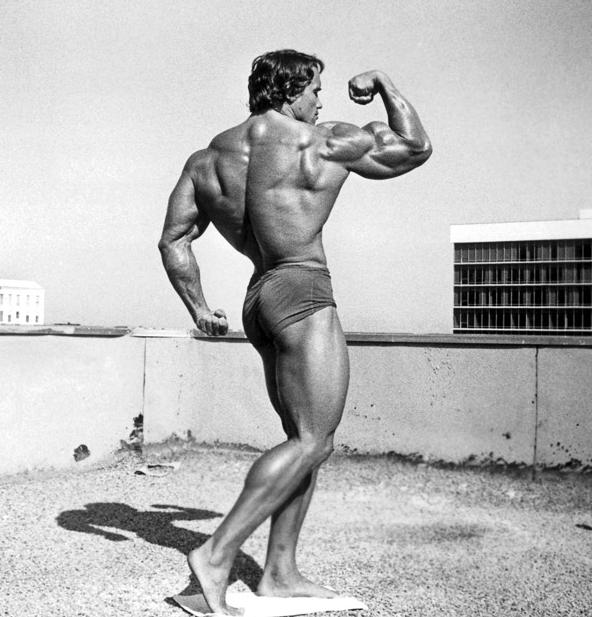
You remember how I mentioned that HYPP horses have muscles that are constantly more contracted? This gives them the appearance of being big, beefy bodybuilder looking horses. They look like the horse version of Mr Universe.
Arnold Schwarzenegger
HYPP, despite its problems, continues to be somewhat sought after in the halter world. An HYPP positive horse has big, dramatic muscling, and tends to be evenly muscled front and back. He looks impressive. That's desirable in the halter show ring, so breeders have continued to breed for HYPP, despite the health risks that go with it.

Impressive himself wasn't too drastic, which is what you'd expect in a horse that only has one HYPP mutation. That's normally written HYPP N/H.

The horse I was looking at was HYPP N/H, and was bred from two HYPP N/H horses. Scary.

When you breed two HYPP N/H horses together, 50% of the time, you will get an HYPP N/H horse. 25% of the time you will get an N/N. The other 25%, you get an H/H.


HYPP H/H horses have rarely won anything in the halter show ring. They tend to be very drastically muscled, and in my opinion, they tend to look a bit grotesque. They're also much more prone to HYPP attacks.


There's a question as to whether it's ethical to continue placing HYPP positive horses in real shows. By placing them, the AQHA is basically giving tacit approval to breed horses that are dangerous, not only to the horse, but to their handlers as well. A horse suffering and HYPP attack can kill or seriously injure anyone or anything around it, as well as itself.


How should a model horse judge look at sculptures of HYPP positive horses? Looking at the rules the AQHA has set would seem a natural place to start.

HYPP N/H is not prohibited in Quarter Horse registration. It's allowable. It's not even heavily discouraged by the breed assocation.

HYPP H/H cannot be registered with the AQHA. Period.

A judge, and a model horse shower, need to know what they're looking at. If the horse looks HYPP H/H, that horse shouldn't place in a model horse show. It's not registrable. If you are going to place it, it had better place only in color classes, or in Mixed Stock Breed/Grade/Mixed Horse classes, because that's all it can be.

What about HYPP N/H? That's legal. Well, this comes down to judge's decision, ultimately. Personally, I won't place an HYPP N/H looking horse over an HYPP N/N horse, pure and simple. If it's not ethical in the real world, it's not ethical in plastic pony land either.

I'd have included pictures of HYPP H/H horses to give you an example of what they look like, but I really don't have the energy to argue with a real horse owner about the intricacies of the laws about libelous writing.

Come back Wednesday for more on Genetic Defects and Model Horses.