Showing posts with label pedigree assignment. Show all posts

Wednesday, February 1, 2012

Genetic Defects and Model Horses: Part Two

Here's part two of my posts on genetic defects and model horses.

I'm going to continue talking about the same horse here. If you'll remember, I mentioned he had Impressive in his pedigree multiple times, and was himself HYPP N/H.

The bottom of the horse's pedigree was nice, with some Three Bars in there (I like Three Bars, just not through Impressive), but there was something scary lurking back there among all the nice stuff: Poco Lena.

But what's wrong with Poco Lena?

Poco Lena comes from the Poco Bueno line. Poco Bueno and Poco Lena carried a defect known as HERDA. This is a recessive mutation that basically causes weakness in the skin. A recessive mutation requires two copies of the mutation to have an effect, so Poco Lena more than likely got it from both her sire and her dam, which means that whole line is very suspect in a pedigree. Current thinking is that the original mutation goes back through a mystery horse line involved in the Poco line, either coming through, or starting at, a horse named Traveler.

There are seven conditions that cause similar problems to HERDA in humans, and they're all very problematic for sufferers. The weakness of the skin caused by these disorders makes it very easy to tear. When skin is opened up, there is a risk of infection. When the skin is easy to tear, that means more opportunities for infection. Simply saddling or riding a horse with HERDA can cause horrific damage to the horse. Sunburn too is a big problem, as the peeling can spread a lot further than it would in healthy skin.

HERDA is usually lethal in 2-4 years in horses.

This is classic HERDA scarring. This is the least disgusting and squicky picture I can find. Everything else is very graphic.

In a way, HERDA is a bit like Vinegar Syndrome if OF model horses, or lifting, in vintage custom model horses.

What does HERDA mean for model horses?

Thankfully, it doesn't mean much. Our plastic horses, unless they have vinegar syndrome, or suffer from lifting, aren't going to fall apart if we happen to have their pedigrees give us a HERDA positive horse.

However, I think for pedigree assignment enthusiasts, HERDA is something to keep in mind. If you wouldn't breed for it in real life, why are you breeding it in your models?

That concludes my Genetic Defects and Model Horses mini-series for now. I don't know enough about other genetic disorders in horses to write about them.

I hope you've enjoyed it, and that it's given you something to think about.

Saturday, January 28, 2012

Genetic Defects and Model Horses: Part One

Today, I went browsing for examples of stud ads, because I want to put together some stud ads for my plastic horses. Since one of the horses I want to make a stud ad for is a quarter horse, I started off by searching for those in a Google image search.

Well, if you know real quarter horses, you know where this is going, don't you?

I found a horse whose portrait looked stunning. He's got a lovely head, and he looks big and studdy. His full body shot wouldn't disappoint... but, I saw something worrying about the pictures. He's big, with a wide chest and haunches, and short legs. He looks like a body-builder. If I didn't know any better, I'd have thought he was a stunning example of a quarter horse. Then I saw the line "this is [horse] in pasture condition", and alarm bells really rang. I suspected that what I saw was a result of a genetic defect called HYPP. Off I went to All Breed Pedigree to confirm my suspicions.

The pedigree is even scarier than I expected. My heart sank. The top side of the pedigree is packed full of Impressive.
Impressive
Why is Impressive a problem? Impressive is the originator of the condition HYPP.

Why should HYPP worry a real horse owner? HYPP is a genetic disorder that has serious health consequences for the horse. His muscles are constantly more contracted rather than relaxed, and when he has an HYPP episode, he can suffer paralysis in his muscles. It doesn't take a genius to know that the heart is a muscle, and that there are muscles responsible for breathing, and in holding the throat open so the horse can breathe. There are muscles involved in digestion too. A horse having an episode can collapse as his legs fail him, or can suffer heart failure, or can suffocate to death, or suffer a deadly colic and this can happen any time his sodium levels creep too high.

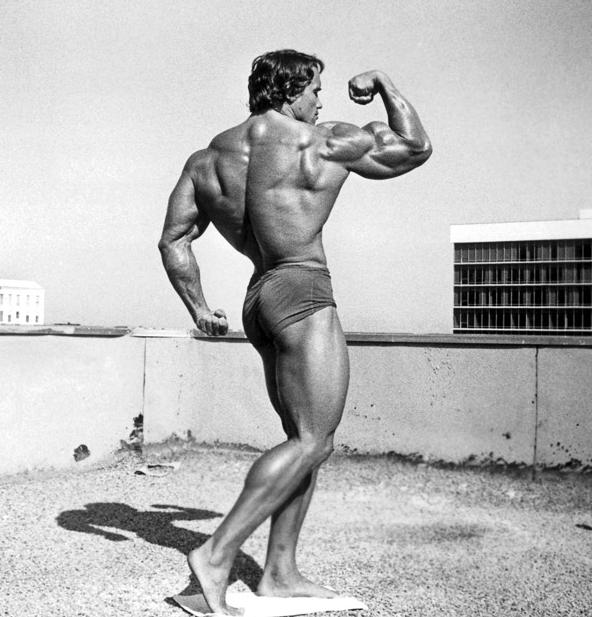
You remember how I mentioned that HYPP horses have muscles that are constantly more contracted? This gives them the appearance of being big, beefy bodybuilder looking horses. They look like the horse version of Mr Universe.
Arnold Schwarzenegger
HYPP, despite its problems, continues to be somewhat sought after in the halter world. An HYPP positive horse has big, dramatic muscling, and tends to be evenly muscled front and back. He looks impressive. That's desirable in the halter show ring, so breeders have continued to breed for HYPP, despite the health risks that go with it.

Impressive himself wasn't too drastic, which is what you'd expect in a horse that only has one HYPP mutation. That's normally written HYPP N/H.

The horse I was looking at was HYPP N/H, and was bred from two HYPP N/H horses. Scary.

When you breed two HYPP N/H horses together, 50% of the time, you will get an HYPP N/H horse. 25% of the time you will get an N/N. The other 25%, you get an H/H.


HYPP H/H horses have rarely won anything in the halter show ring. They tend to be very drastically muscled, and in my opinion, they tend to look a bit grotesque. They're also much more prone to HYPP attacks.


There's a question as to whether it's ethical to continue placing HYPP positive horses in real shows. By placing them, the AQHA is basically giving tacit approval to breed horses that are dangerous, not only to the horse, but to their handlers as well. A horse suffering and HYPP attack can kill or seriously injure anyone or anything around it, as well as itself.


How should a model horse judge look at sculptures of HYPP positive horses? Looking at the rules the AQHA has set would seem a natural place to start.

HYPP N/H is not prohibited in Quarter Horse registration. It's allowable. It's not even heavily discouraged by the breed assocation.

HYPP H/H cannot be registered with the AQHA. Period.

A judge, and a model horse shower, need to know what they're looking at. If the horse looks HYPP H/H, that horse shouldn't place in a model horse show. It's not registrable. If you are going to place it, it had better place only in color classes, or in Mixed Stock Breed/Grade/Mixed Horse classes, because that's all it can be.

What about HYPP N/H? That's legal. Well, this comes down to judge's decision, ultimately. Personally, I won't place an HYPP N/H looking horse over an HYPP N/N horse, pure and simple. If it's not ethical in the real world, it's not ethical in plastic pony land either.

I'd have included pictures of HYPP H/H horses to give you an example of what they look like, but I really don't have the energy to argue with a real horse owner about the intricacies of the laws about libelous writing.

Come back Wednesday for more on Genetic Defects and Model Horses.

Tuesday, December 6, 2011

Caballo Criollo Colombiano

The Stablemate from last Friday's post was going to be pedigreed as a Colombian Criollo, rather than being a plain old Iberian breed, such as an Andalusian or Lusitano. Of course, since I neither speak Spanish, nor have friends in Latin America, finding information about these horses has been tricky.

Though the Colombian Criollo is named a Criollo, that doesn't mean it's the same as the Argentinian Criollo; here, Criollo is used to mean 'Latin American horse', as it is for many South American breeds. The Colombian Criollo has also been called the Colombian Paso Fino. From the gist of the google translations of Colombian Criollo forums, it isn't really considered fair to call them that either.

The reason it's not really fair to call the Colombian Criollo a Paso Fino is because thanks to the introduction of imported Canadian Pacers and Trotters to the breed during the heyday of sugar plantations, it's very different from other Paso Finos. The breed retains little of its Iberian ancestry compared to other Latin American breeds.

Though there is some cross breeding with the Paso Fino, Colombia has types of horse that appear to be unique to Colombia. Something about the land there makes the gaits of other Spanish-descended breeds less practical. Translations suggest that the rough terrain makes an ambling or gaited horse more practical for every day use.

Well, now I had a bit of a background on why the Colombian horses are different, that still left the question: different how?

As it turns out, Colombia has three types of gaited horse, all more or less considered the same breed: the fino, the trocha, and the trote y galope.

The paso fino does exactly what you'd expect it does: the fino. This variety appears to be crossed with Paso Finos more often than the other varieties.

The trocha is more or less what we'd call the foxtrot, a broken trot sequence where the diagonal pairs are picked up at the same time, but with the front foot landing before the hind foot.

The trote y galope trots, and performs an extremely collected canter. They actually do this naturally in the field as foals, which was very interesting to watch on You Tube. Watching the foals in videos, it does appear they can also perform a more stretched canter, but naturally tend to fall into the very collected form.

So where do the trocha, trote, and galope come from?

It appears the introduction of the mare La Danesa and her very popular and prolific son Don Danilo are behind the introduction of the new gaits to the Colombian horses. La Danesa's sire was a bullfighting Lusitano brought to Colombia in 1946 by the bullfighter Lady Conchita Cintron.

Don Danilo (Rey Cometa X La Danesa)

Don Danilo could perform the paso fino, the trocha, the trote and the galope, on command. Many of his famous offspring were trocha and trote y galope horses.

So, now I had to decide: is LRH Y B Rojas a fino, a trocha, or a trote ye galope? Since he's not performing any gait, he could be anything I liked. But, there appear to be differences in build between the types of horses.

The fino is longer in the back, shorter in the legs, and all around thickly built, and looks a bit like a classical painting of a horse. It looks like you expect a Paso Fino to look. That build is what makes him perform that gait. Pretty much any horse built that way, regardless of its breed, will try to move the way the Paso Fino does, because it's the best way for its body.

The trocha is similarly thick, but more proportional, at least to my eyes. He's not so short in the legs and long in the back as the fino.

The trote y galope looks more like what I think of when I think 'horse'. I'm from thoroughbred country, having grown up only an hour and a half trot (12 miles) from Newmarket in the UK. They're a little more fine than the trocha and fino, and look very much like a sporty Spanish bred horse, rather than a baroque Spanish horse.

It should be noted that they all still very much fit the breed description of the Colombian Criollo, despite their differences in build. The differences are slight, but I think quite noticeable. In any case, you'd know what you're looking at as soon as it moved, even if you couldn't really see the slight differences I'm seeing in how they're put together.

Y B Rojas isn't really thickly built enough for the trocha or the fino, and his legs are too long for a fino. That leaves me one option: he's a trote y galope. That suits me fine, I think they're prettier anyway.

I hope that post gives people a tiny bit of insight on Colombian Criollos, and I hope I've understood what I've read.

If you can type in English well enough to tell me more, I'd love to hear more about the breed, if you know more. I mean no offense when I ask that you write to me in English, I just really don't know any Spanish at all, I only learned French, German, and a smattering of Swedish and Japanese.

Links to more information about Colombian horses:
Staccato Beat! Gaits of the Paso Fino
American Trote and Trocha Association: Breed Information
American Trote and Trocha Association: Don Danilo
Pet MD: Colombian Criollo
Google Books: International Encyclopedia of Horse Breeds by Bonnie L. Hendricks and Anthony A. Dent

Wednesday, November 23, 2011

All Breeds Racing Board Annual Starters Auction

The All Breeds Racing Board Starters Auction just ended. I bid on a few horses, but some of the bidding was crazy competitive, and I didn't have as many points to bid as some of the older members. I bowed out of bidding on two of the horses I was interested in, and put in bids on two more horses toward the end. I lost one, but kept the other, and I'm very happy I picked up at least one of the lots I bid on.

Here's the details for the horse I won in the auction:
2008 Arabian colt or filly by Before The Storm (Silver Prince X Layla) out of Johar (Dahess X Truely A Dream). Consigned by Emory Oak Stables.

I got to choose some of the details, like color and gender, and I've chosen to make a one of a kind custom.

Here's what I've decided on:

She's going to be named Aasifa Bint Johar.

She's going to be made from a Classic Andalusian Stallion, with a lot of customizing to turn her into a mare breaking from the start line. Here's a basic idea of what I want to do for the pose. I'll be replacing the neck, mane and tail with original sculpts, and the head's going to get a lot of detailing, and I suspect I'll be doing a lot of remaking around the flanks. This might just be one of the most drastic models I'll do.

Color wise, I want dapples like this, but with a chestnut base:

Aasifa is my next project for myself after I finish Antar, and get a few sales pieces done. I'm going to get bits and pieces of her done whenever the mood strikes and I've got some time to spare to get on with it.

Who knows, perhaps one day, an Antar Al-Ahmar X Aasifa Bint Johar foal might show up in the Starters Auction? ;)

Monday, October 10, 2011

Tricky Breed Assignments: Mesteño

Some models are not well-liked in the model horse showing crowd. Some of them are models that don't have good anatomy, and have glaring errors that will get them marked down as a result. Those with decent anatomy are sometimes still badly conformed, but at least look like they're a horse. Those with good anatomy and good conformation can have color problems for the most common breeds that will be suggested.

I conga the Classic standing Mesteño. For all its niggling details, I think it's a very enigmatic model. He's a big, powerful, alert horse, able to reach well under himself in the back. Honestly, he looks like he'd have a high action in the front, too, with his front legs being the way they are. To me, he's a very attractive horse, even with his faults.

So what are his faults?
  1. His neck is thick and unrefined, and extremely thick in the throatlatch. This horse, if it were real, is extremely cresty, with a thick, inflexible throatlatch. He'd have a hard time getting his head down, if he could do so at all.
  2. His hooves are positively horrid, especially on the rear leg that's furthest back.
  3. He's narrow across the hips, and thick across the shoulders.
  4. He has a very coarse head, with that typical flat nose we see in most Breyers.
Okay, clearly, this is a horse that will struggle in shows, both photo shows and live shows. While you might be inclined to show him as a Mustang, if you show him at all, there are in fact other options. Here's a few to consider:
Mongolian Horse
The Mongolian Horse is a very old breed, supposedly unchanged since the time of Genghis Khan. It's a hardy horse, with a stocky build, short legs, and a large head, and a very long mane and tail.

Mesteño isn't a great match for the Mongolian pony, he's long in the neck, and short in the head to be a good representative of the breed, but it's worth a shot if you want to try showing something more unusual.

Australian Brumby
The Australian Brumby is a feral horse, much like the Mustang, found in Australia. They're descended from a wide variety of horse breeds introduced to Australia. Brumbies from various regions have different mixes of breed that have gone into making the modern animal.

Since there isn't really an iconic Brumby appearance, this might be a decent breed assignment for Mesteño models. Brumbies are somewhat common in some showing crowds, so you might find you'll have some hot competition if you decide to show your Mesteno as a Brumby.

Carolina Marsh Tacky
The Carolina Marsh Tacky is a breed native to South Carolina. Like the Florida Cracker and North Carolina Banker, it has colonial Spanish blood that connects it to some of the earliest equines imported to the Americas. It is only recently that a study determined that the Marsh Tacky is gaited: it performs something that is called the Swamp Fox Trot, a broken trot like the foxtrot, but with the timing and durations being more similar to the marcha batida. The marcha batida lacks the diagonal pairing found in the Swamp Fox Trot, however.

I actually show Rum Runner as a Carolina Marsh Tacky. I think he's a decent fit for the breed, if a bit coarse in the head and neck. You won't see too many people showing Carolina Marsh Tackies. The catch to this, of course, is that you tend to be in the "Other Pure Breeds" category, which can mean tough competition from all the other rare breeds.
If you're prepared to customize your Mesteño to show him, then these breeds might give you a jumping off point for what to do once you've decided to customize him. Sadly, most of the customizing you'd need to do would be a lot of work. The Mesteño horse is a drastic job, no matter how you look at him.

Thursday, August 18, 2011

Today is P.A. Day

Today, I've got to take my cat to the vet for a follow-up, so I'm not going to get much hobby stuff done today. I've decided that today, I'm going to really buckle down and work on my pedigrees. The Sire and Dam lists might look wonky a little while I'm working on this.

Yesterday, I drafted up a quick pedigree for Wasabi Sensation, the Standardbred Pacer I'm doing a repaint on. I haven't done a real horse pedigree before this one, this is my first crack at it. I wasn't really all that happy with the pedigree, so this morning, I did a bit more research and found a dam I like better.

As it stands right now, he's a 2005 stallion by Fantastic Frisky, out of Cayenne Pepper K. It might look from his bloodlines like he'd be a trotter, but Fantastic Frisky actually performed equally well as a trotter and as a pacer, in fact, in some ways he was better as a pacer, because he didn't break over while pacing.

To make this clear to anyone who ends up here because they're looking for real Standardbreds, this is a model horse blog, and Wasabi Sensation doesn't actually exist. He's a plastic toy horse. For more information on model horse pedigree assignment, check out these links:
Model Horse Pedigree Assignment/Breeding: An Explanation for Real Horse owners
Model Horse Breeding (Pedigree Assignment)
Breeding Model Horses (aka Pedigree Assignment)